

Blog
Why You Stop Smelling Your Own Perfume (And Why Others Still Can)

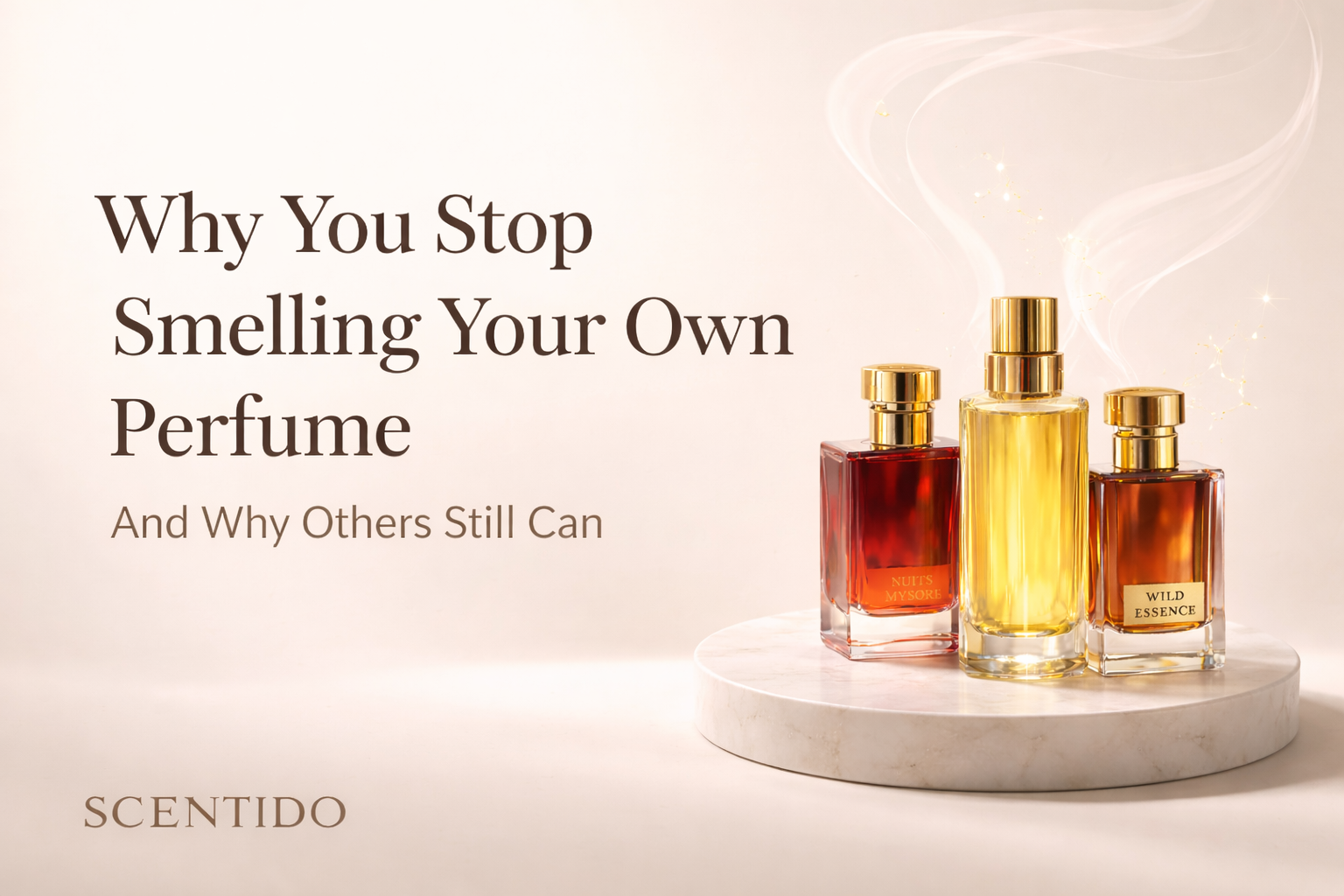
Have you ever applied your favorite perfume in the morning, only to feel like it disappeared after an hour—yet people around you still compliment how good you smell? This common experience leads many people to believe their perfume isn’t long-lasting, but the truth is far more interesting.
In 2026, fragrance experts are paying closer attention to a phenomenon known as olfactory adaptation, and understanding it can completely change how you judge perfumes.
The Brain, Not the Perfume, Is the Reason
Your sense of smell is designed for survival, not luxury. When your brain detects a scent continuously, it slowly stops responding to it. This process helps humans notice new smells that may signal danger or opportunity.
When you wear long-lasting perfumes, your brain adapts to the scent to avoid sensory overload. As a result, you stop noticing it—even though the fragrance is still present and detectable to others.
This is why judging perfume longevity based only on your own perception is misleading. Many people discard perfectly good best perfumes simply because their brain has learned to ignore them.
Why Quality Perfumes Trigger Adaptation Faster
Interestingly, well-balanced luxury perfumes often trigger olfactory adaptation more quickly than harsh or synthetic fragrances. Smooth compositions blend naturally with your skin, making them less “noticeable” to your own senses over time.
This is actually a sign of quality. Perfumes that scream for attention often contain sharp, unrefined notes that resist adaptation—but they can become irritating to others.
Brands that specialize in refined fragrances and perfumes design scents meant to feel natural, not overwhelming.
Why People Around You Still Smell Your Perfume
While your brain adapts, other people encounter your scent intermittently—when you move, gesture, or walk past. This means they experience the perfume fresh each time, without adaptation.
This explains why perfumes inspired by best perfumes in Dubai are often praised for projection and longevity, even when the wearer feels they’ve faded. These fragrances are built to leave a subtle scent trail rather than constant intensity.
How This Knowledge Changes Buying Decisions
Many people overspray or chase stronger perfumes unnecessarily. Understanding olfactory adaptation helps you choose smarter:
- You don’t need overpowering scents to be noticed
- Longevity ≠ constant smell to yourself
- Balanced perfumes are more socially pleasant
This is especially important when choosing long lasting perfumes for women, where elegance and comfort matter more than loud projection.
The Hidden Impact on Perfume Gifting
This phenomenon also explains why some gifted perfumes seem “weak” to the wearer but receive compliments from others. This is why luxury perfumes for gifting are often designed with soft diffusion rather than aggressive strength.
A perfume that adapts smoothly feels intimate and personal—perfect for daily wear.
Affordable Perfumes and Adaptation
Surprisingly, adaptation isn’t limited to expensive products. Many people experience this effect even with the best perfume under 1000, proving again that longevity isn’t just about price.
What matters is formulation, balance, and how the perfume interacts with skin.
Final Thoughts
If you stop smelling your perfume, don’t assume it has disappeared. In many cases, it means the fragrance is doing exactly what it should—blending naturally into your presence.
The next time you choose a perfume, remember:
The best scents aren’t the ones you constantly notice—they’re the ones others remember.